Communications Infrastructure

Danny Corprew
|
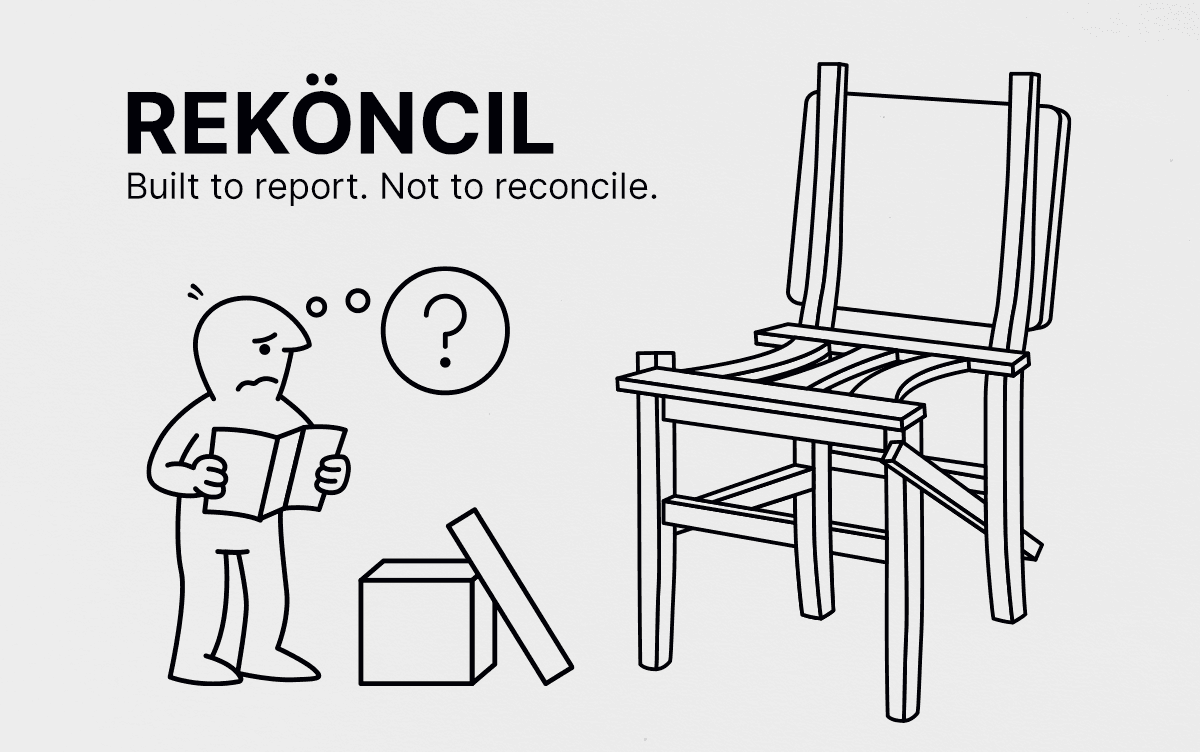
At some point, every communications strategy has to be reconciled to the numbers. Months of activity and spend across teams, platforms and agencies have to become one view of what communications produced for the business.
What should be a straightforward translation of effort into value starts to feel like assembling the IKEA desk you thought would be a fun Sunday afternoon project. Everyone shows up ready to help, but one person has the drawers, another has the legs, and someone else has been working from a different set of instructions altogether.
Assembling intelligence across a communications function can feel surprisingly similar, and the cost of working this way goes far beyond assembling the reporting. It shows up in the time spent reconciling and remediating data, the time leadership spends waiting for meaningful intelligence, the internal capabilities that can't fully use communications data, and the insights that don't move across the function to make the next decision smarter.
Together, these costs make the function more expensive to operate, slower to respond and harder to steer with precision.
1. The cost of measuring multiple times
Most large communications functions are being measured by multiple parties at the same time.
PR agencies measure earned media. Digital partners measure behavior and performance. Social platforms provide their own analytics. Listening tools measure conversations and sentiment. Internal teams may maintain their own reporting on top of all of it.
There’s nothing inherently wrong with specialized measurement. The problem is that each party is generally measuring its part of the function within its own environment, using its own data and definitions.
The enterprise can end up paying several parties to tell it what’s happening in communications without any one of those measurements producing a complete view of the function.
2. The cost of making your own data usable
This is where fragmentation creates another layer of cost. Data collected across different platforms and partners doesn’t simply become enterprise intelligence when the reports arrive.
Someone has to reconcile definitions, align reporting periods, resolve discrepancies, normalize metrics, connect datasets and determine what can actually be compared. Questions that should be answered through the data become workflows involving spreadsheets, emails, meetings and people who know where the context lives.
The enterprise paid to create and measure the data. Now it’s paying again to make that data useful to itself, and much of that work repeats. Whenever a new campaign starts, a partner changes or leadership asks a different question, the organization can find itself reconstructing relationships in the data that its infrastructure didn't preserve.
3. The cost of waiting for intelligence
The time spent connecting all of this creates another cost that’s harder to see on a budget: latency. When intelligence has to be assembled across disconnected sources, there is an unavoidable delay between what is happening and when the organization understands it well enough to act.
The problem is that while the organization is working to understand what’s happening, the market is still moving. Narratives shift or crystallize, issues become harder to influence, and budget continues moving. By the time meaningful intelligence reaches leadership, some of the opportunity to act on it may already be gone.
Communications operates in an environment that is moving faster and becoming increasingly precise. Its intelligence infrastructure has to keep pace with both.
4. The cost of learning the same things again
This may be the least visible cost of all. Every part of communications learns something through the work it does. Each channel learning should make the entire function smarter: PR, socials, web, search & AI.
When that intelligence stays with the platform, partner or team that created it, the benefit tends to stay there too. Each learning has a limited reach, informing the work closest to where it was created rather than becoming the context the rest of the function can build from.
The organization paid for each of those learnings. Without the infrastructure to carry them across the function and forward over time, it can end up paying to learn the same things multiple times.
5. The cost of capabilities you can’t use
This becomes increasingly important as enterprises build more of their analytics and intelligence capabilities internally. Many large organizations now have BI teams, data scientists, centralized data environments and increasingly powerful AI systems.
But communications can't fully benefit from or contribute to those investments if the enterprise can't bring the function's data into them. That leaves communications data largely confined to the function.
As more of the enterprise's data, analytics and AI capabilities become centralized, the functions connected to that infrastructure have a clearer path into how the organization understands performance and makes decisions.
Communications risks remaining outside of that conversation, not because its data is less valuable, but because its data isn't part of the infrastructure where that intelligence is being built.
Better data infrastructure changes the economics
The answer isn’t another dashboard or another layer of reporting. It’s data infrastructure that allows the enterprise to own, connect and govern the data being created across the entire communications function.
When those relationships are established in the infrastructure, the organization doesn’t have to keep rebuilding them every time it needs an answer. What communications learns in one place can add context somewhere else, and what it learns today can deepen what it understands tomorrow. Over time, the function isn’t just producing more data. It’s building organizational intelligence.
That changes the economics of communications, because value created from its data no longer has to scale alongside the cost of fragmentation. Instead, a centralized data infrastructure allows the function to grow from a common foundation, so more intelligence doesn’t have to equal more cost.